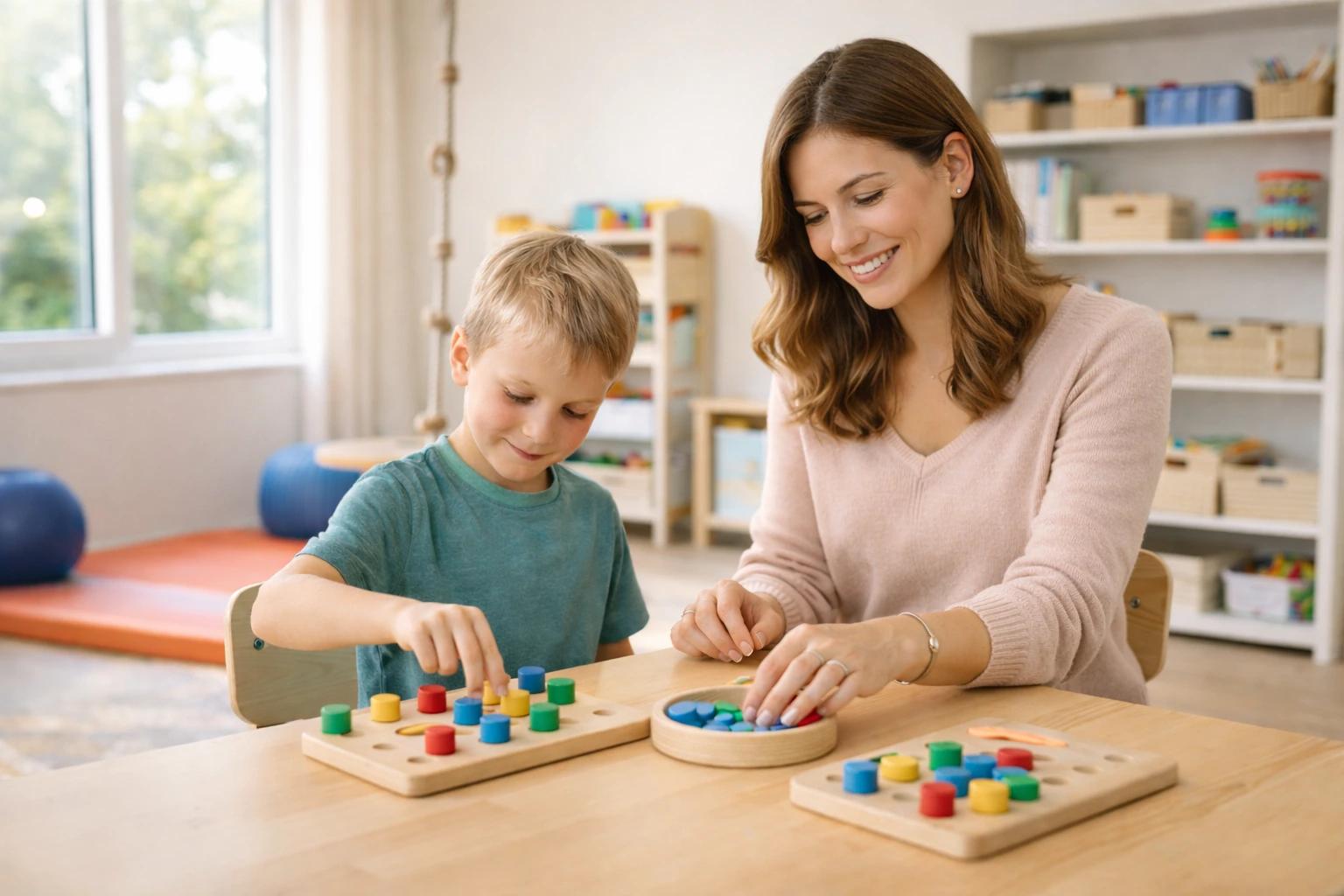

Pediatric Occupational Therapy helps children develop and strengthen the skills they use in everyday life.
Children develop and learn at their own pace. Sometimes, a child may find certain everyday activities, learning tasks, play, movement, or participation more difficult than expected. Pediatric Occupational Therapy support the development of skills needed for everyday activities, participation, and independence.
Occupational Therapy begins with understanding the child — their age, needs, and individual situation.
The therapist consider:
i) Parent & Caregiver Information: Parents and caregivers can provide important information about the child's daily routines, activities, strengths, difficulties, and participation at home.
ii) Observation: The therapist may observe how the child performs activities, interacts with people and objects, responds to different situations, and participates in meaningful tasks.
iii) Assessment: The Occupational Therapist may use appropriate clinical observations, assessments, and professional reasoning to understand the child's abilities and areas that may need support.
iv) Goals: The therapist works with the family to identify meaningful and functional goals based on the child's needs.
v) Intervention: The therapist selects appropriate activities and therapeutic approaches based on the assessment and goals.
vi) Review: The child's progress and changing needs can be reviewed over time, and goals or intervention may be adjusted when appropriate.
Depending on the child's goals, a session involves activities designed to work on:
- Fine Motor Skills
- Coordination
- Self-care activities
- Play
- Attention and participation
- Sensory processing
- School-related skills
- Functional independence
- Other areas identified during assessment
The therapist chooses activities according to the child's individual needs and goals
Parents and caregivers play an important role in a child's development.Occupational Therapy does not only happen during the therapy session. The therapist guide parents or caregivers on ways to support the child's goals during everyday routines and activities.
This can help families understand:
- What the child is working towards
- How to support skills during daily activities
- How to make practice meaningful and practical
- What progress to look for
- When goals may need to be reviewed
The therapist and family can work together as part of the child's support.